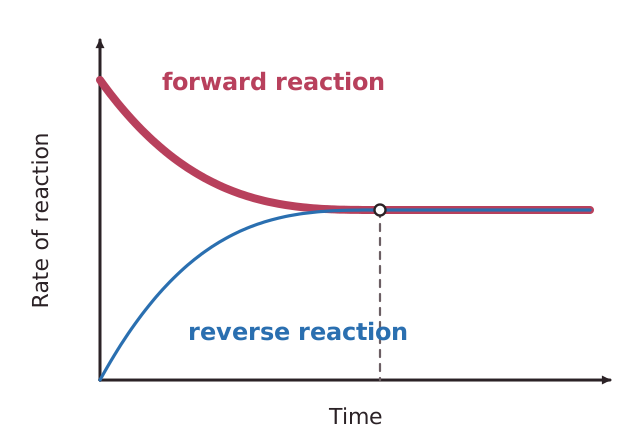
A reversible reaction in a closed system, where nothing can enter or leave, eventually reaches dynamic equilibrium. At the start the reactants are at their highest concentration, so the forward reaction is at its fastest and there is no reverse reaction. As products build up, the forward reaction gets slower and the reverse reaction gets faster.
At equilibrium the rate of the forward reaction is equal to the rate of the reverse reaction. Both reactions are still happening, which is why the equilibrium is called dynamic. Nothing has stopped, but the two changes cancel each other out.
Because the rates are equal, the concentrations of the reactants and products stay constant. They are not necessarily equal to each other. There may be far more products than reactants, or the other way round. If the system is open, products can escape, so equilibrium is not reached.