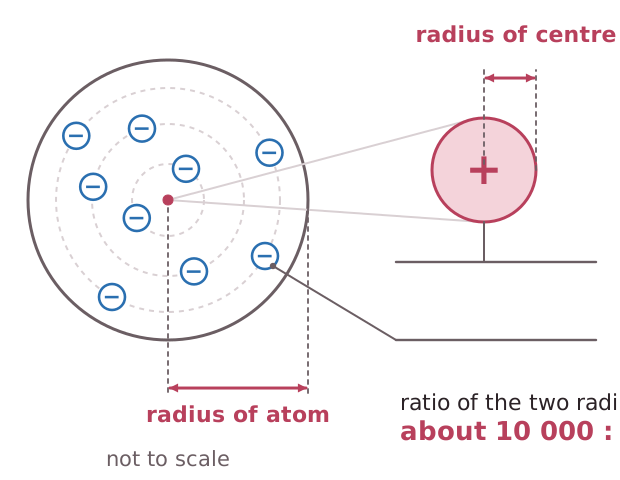
An atom has a tiny nucleus at its centre. The nucleus has a positive charge. The electrons have a negative charge and move around the nucleus.
An atom is neutral overall, because the positive charge of the nucleus is balanced by the negative charge of the electrons.
The nucleus is very small compared with the whole atom. The radius of an atom is roughly ten thousand times bigger than the radius of its nucleus, so the nucleus is much smaller than the atom, and most of the atom is empty space.
Electrons have very little mass. Almost all of the mass of an atom is therefore in the nucleus, even though the nucleus takes up only a tiny part of the volume.