A system has energy stored inside it, called its internal energy. This is the total of the kinetic energy of its particles (energy of movement) and their potential energy (energy stored because of the forces between them).
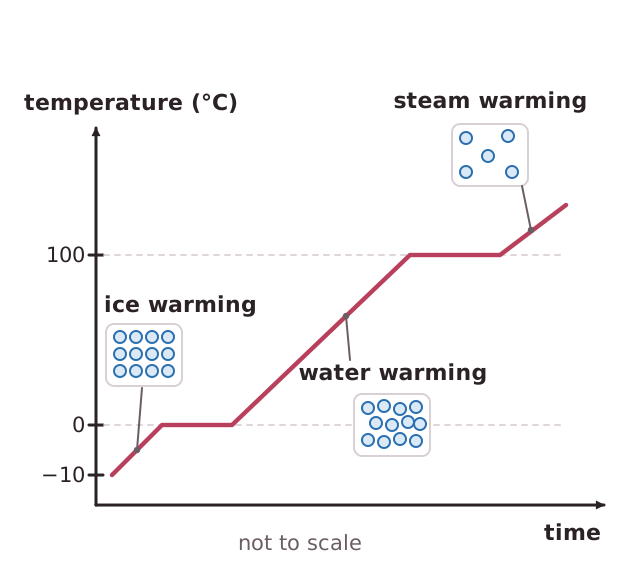
Heating a system transfers energy to it, so its internal energy increases. This has one of two effects. Either the temperature rises, because the particles move faster and gain kinetic energy, or the substance changes state, because the particles gain potential energy as they move further apart.
On a graph of temperature against time for heating ice, the line rises while the solid, liquid or gas is warming up. It is flat at 0 °C while the ice melts and flat at 100 °C while the water boils. In these flat sections the energy supplied is changing the state, so the temperature stays constant.