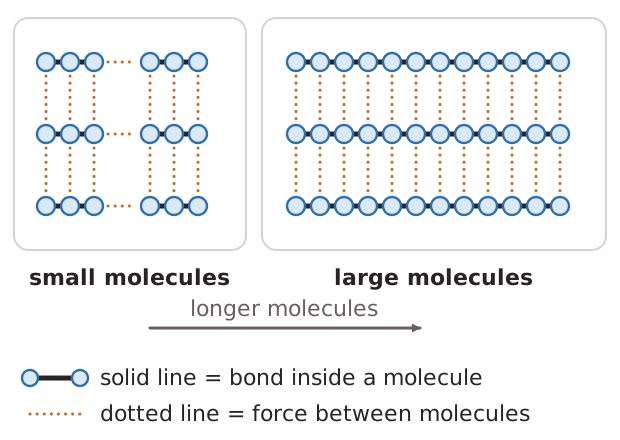
Hydrocarbons are made of small covalent molecules. Within each molecule the atoms are held together by strong covalent bonds, but between separate molecules there are only weak intermolecular forces. When a hydrocarbon boils, it is these intermolecular forces that are overcome, not the covalent bonds inside the molecules.
The larger the molecule, the stronger the intermolecular forces between molecules. More energy is therefore needed to separate large molecules from each other, so larger molecules have higher boiling points. In fractional distillation the fractions are separated by molecular size: small molecules with low boiling points stay as vapour until they reach the top of the column, while large molecules with high boiling points condense lower down, and the largest condense at the bottom.
Molecular size also changes other properties. Fractions with small molecules, such as petrol, flow easily and ignite easily. Fractions with large molecules, such as bitumen, are very viscous (thick and slow flowing) and are harder to ignite. A fraction with smaller molecules also leaves the column higher up than one with larger molecules.