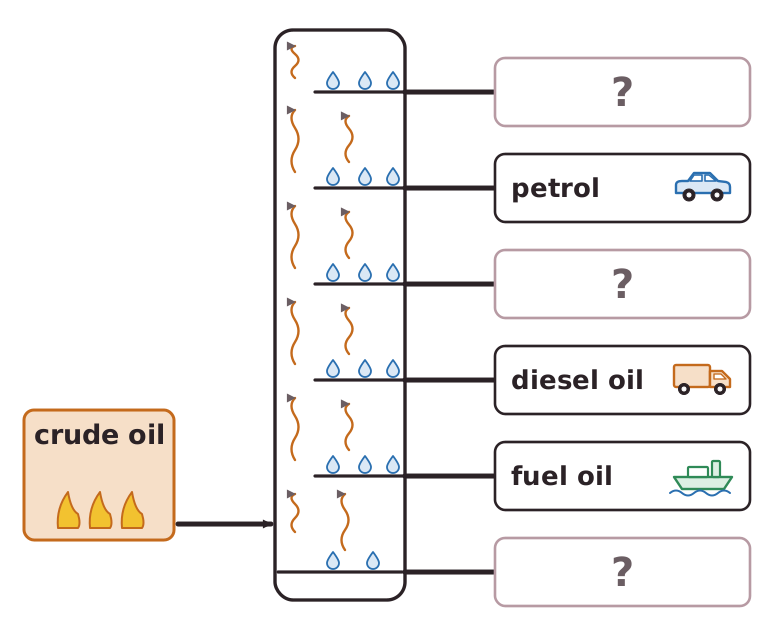
Crude oil is a mixture of many hydrocarbons. It is separated into more useful parts, called fractions, by fractional distillation. Each fraction is itself a mixture of hydrocarbons with similar boiling points, so it boils and condenses over a range of temperatures rather than at one fixed temperature.
The crude oil is heated until most of it turns to vapour, and the vapour enters a tall fractionating column near the bottom. The column is hottest at the bottom and coolest at the top. The vapours rise up the column, and each fraction condenses when it reaches a part of the column that is cooler than its boiling point. The liquids are then drawn off at different heights.
The fractions with the lowest boiling points leave at the top and the fraction with the highest boiling point leaves at the bottom. From the top to the bottom they are refinery gases (including LPG), petrol, kerosene, diesel oil, fuel oil and bitumen. Petrol, diesel oil and kerosene are used as fuels for cars, lorries and aircraft, fuel oil is burned in ships and power stations, and bitumen is used to surface roads.