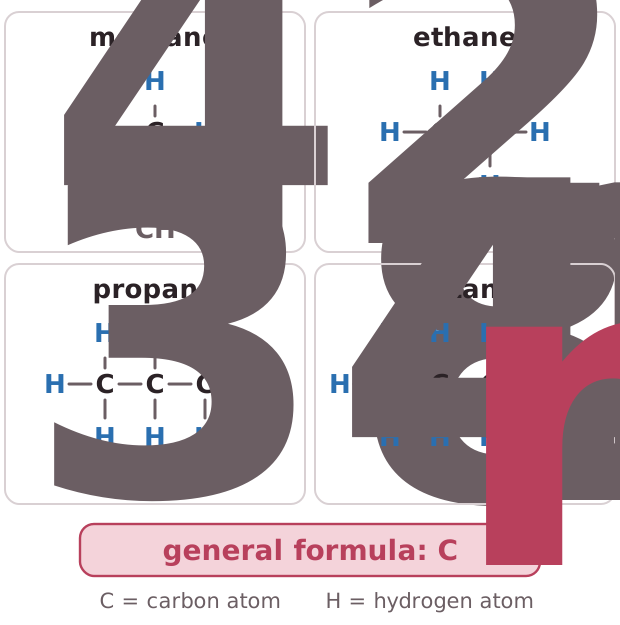
A hydrocarbon is a compound that contains only hydrogen and carbon atoms. Each fraction from crude oil is largely a mixture of different hydrocarbons, so it is not a single pure compound and it boils over a range of temperatures. Most of these hydrocarbons are alkanes.
The alkanes are a homologous series. A homologous series is a family of compounds with the same general formula and similar chemical properties, where each member differs from the next by one extra carbon atom and two extra hydrogen atoms. The general formula of the alkanes is CnH2n+2, where n is the number of carbon atoms. So methane is CH4, ethane is C2H6, propane is C3H8 and butane is C4H10.
Alkanes are saturated: all the bonds between their carbon atoms are single covalent bonds. Their physical properties change in a regular way along the series. As the molecules get longer the boiling point rises, which is why the different alkanes in crude oil end up in different fractions.