Most metals are found in the Earth's crust as compounds, usually oxides, mixed with rock. A rock that contains enough of a metal compound to be worth extracting is called an ore. To get the metal out, the oxygen must be removed from the oxide. Removing oxygen is called reduction.
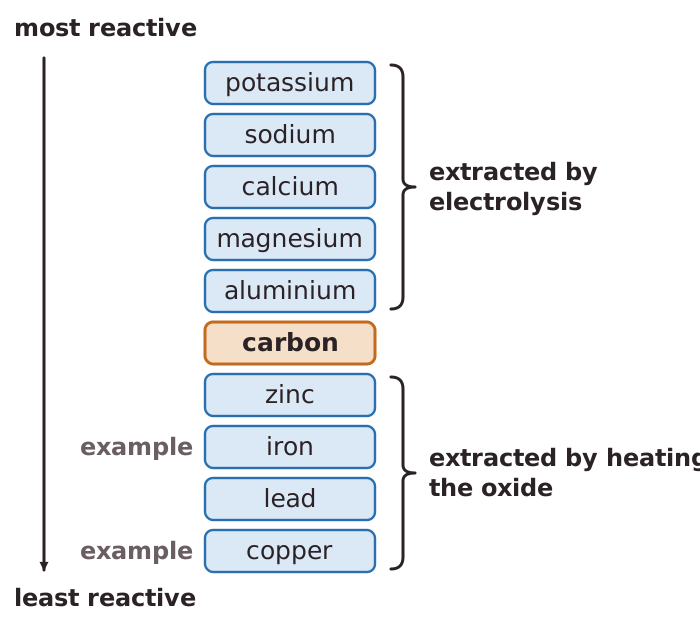
The reactivity series ranks metals by how readily they react. Carbon sits in the series between aluminium and zinc. A more reactive element takes oxygen from a less reactive one, so carbon can reduce the oxide of any metal that is less reactive than carbon. Iron is made this way in a blast furnace. The ore is haematite, which is iron(III) oxide, and it is heated with carbon: 2Fe2O3 + 3C → 4Fe + 3CO2. The carbon takes away the oxygen and the iron oxide is reduced to iron.
Iron is a ferrous metal because it contains iron. A non-ferrous metal is one that is not iron, and copper is an example. When black copper oxide is heated with carbon, a pink-brown solid forms. This solid is copper, and the gas given off is carbon dioxide: 2CuO + C → 2Cu + CO2.
Metals that are more reactive than carbon, such as aluminium, hold on to their oxygen too strongly. Carbon cannot displace them, so a different method is needed.