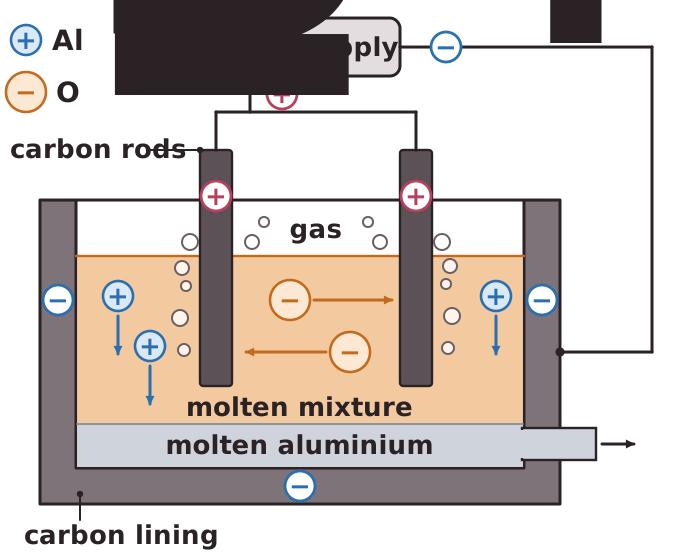
Metals that are more reactive than carbon cannot be extracted by heating with carbon, so they are extracted by electrolysis. Electrolysis uses electricity to break down a compound. The compound must be molten or dissolved in water so that its ions are free to move and carry the electric current. This liquid is the electrolyte. The positive electrode is the anode and the negative electrode is the cathode. Positive metal ions move to the cathode, where they gain electrons and become metal atoms. Negative ions move to the anode.
Aluminium is extracted from aluminium oxide, which comes from the ore bauxite. Aluminium oxide has a very high melting point, so it is dissolved in molten cryolite. This lowers the temperature needed and saves energy. Aluminium forms at the cathode. Oxygen forms at the carbon anodes and reacts with the carbon to make carbon dioxide, so the anodes burn away and must be replaced. The process uses a lot of electricity, which makes aluminium expensive to extract.
In an aqueous solution, water also supplies hydrogen ions. At the cathode, hydrogen forms if the metal is more reactive than hydrogen, and the metal forms if it is less reactive than hydrogen. In copper sulfate solution with inert electrodes, copper forms at the cathode and oxygen forms at the anode. In sodium chloride solution, hydrogen forms at the cathode and chlorine forms at the anode, and the solution left contains sodium hydroxide.