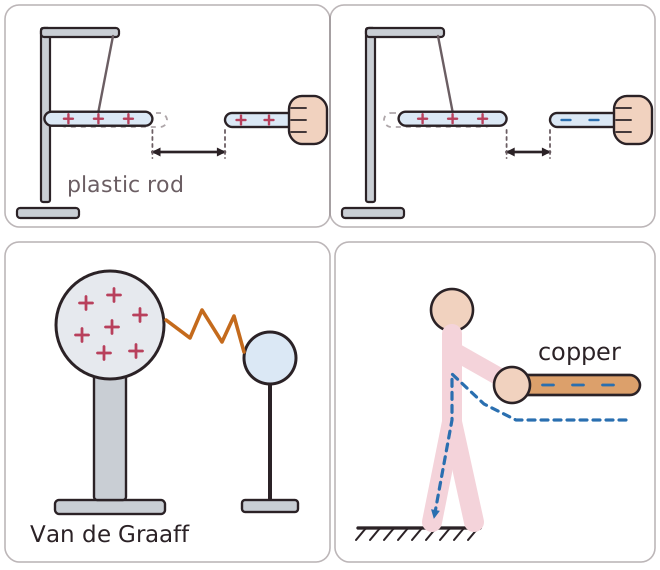
Static electricity is made when two insulating materials are rubbed together. Rubbing a plastic rod with a cloth is a common example. Each material ends up with a charge, and the charge stays where it is because an insulator does not let charge move through it. This is why static charge builds up easily on insulators.
Conductors behave differently. If you hold a copper rod in your hand and rub it, any charge that builds up flows away through your body to the earth, so the rod cannot stay charged. A conductor can only stay charged if it is insulated from the earth, like the metal dome of a Van de Graaff generator, which stands on an insulating column.
When a large amount of charge builds up on an object, such as the dome of a Van de Graaff generator, the charge can jump across the gap to a nearby object. We see and hear this as a spark.
Charged objects exert forces on each other without being in contact. A charged rod hung from a thread is pushed away by a second rod with the same charge, which is repulsion, and pulled towards a rod with the opposite charge, which is attraction. The forces act over a distance.