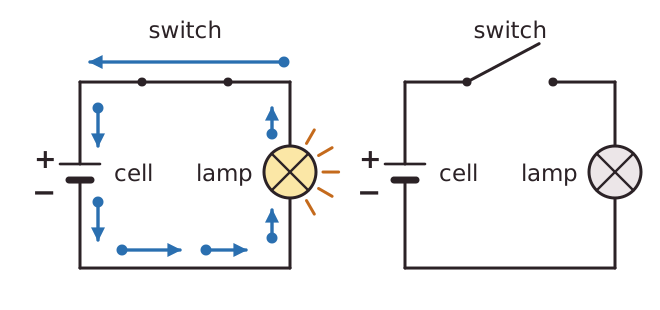
An electric current is the rate of flow of charge. In a metal wire the charge is carried by electrons, which are free to move through the metal. The electrons move from the negative terminal of a cell towards the positive terminal.
Two conditions must be met for charge to flow. First, there must be a source of potential difference, such as a cell or battery, which pushes the charge round. Second, the circuit must be closed, which means there is a complete loop with no gaps.
If a switch is opened, the circuit is no longer closed. Charge cannot flow round, so there is no current and a lamp in the circuit goes out. When the switch is closed again, the loop is complete and the current flows.