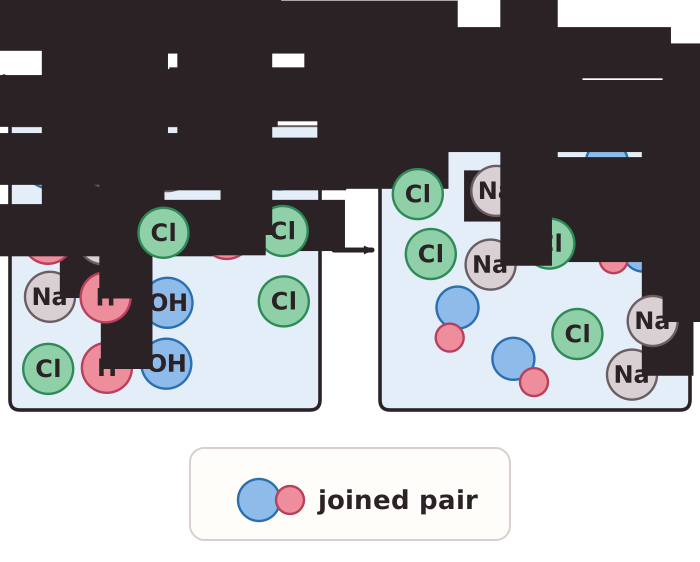
In aqueous neutralisation an acid reacts with an alkali in solution. The acid supplies hydrogen ions, H+, and the alkali supplies hydroxide ions, OH-. The hydrogen ions react with the hydroxide ions to form water. This is the ionic equation: H+(aq) + OH-(aq) → H2O(l).
Take hydrochloric acid and sodium hydroxide solution. The solution contains H+ and chloride ions from the acid, and sodium ions and OH- ions from the alkali. Only the hydrogen ions and hydroxide ions join together to make water. The sodium ions and chloride ions do not change. They stay dissolved in the solution, and together they are the salt, sodium chloride.
Because this is what happens in every case, the same ionic equation works for any acid and any alkali. Sulfuric acid with potassium hydroxide, and nitric acid with sodium hydroxide, have the same ionic equation. Only the salt left in solution is different.