Neutralisation is the reaction of an acid with an alkali or a base to form a salt and water. For example, hydrochloric acid and sodium hydroxide react: HCl + NaOH → NaCl + H2O. A base is a substance that neutralises an acid, such as a metal oxide or a metal hydroxide. An alkali is a base that dissolves in water.
The name of the salt comes from the acid. Hydrochloric acid makes salts called chlorides, sulfuric acid makes sulfates and nitric acid makes nitrates. The first part of the name comes from the metal in the base. Copper oxide is a base, so it reacts with sulfuric acid: CuO + H2SO4 → CuSO4 + H2O. The salt is copper sulfate.
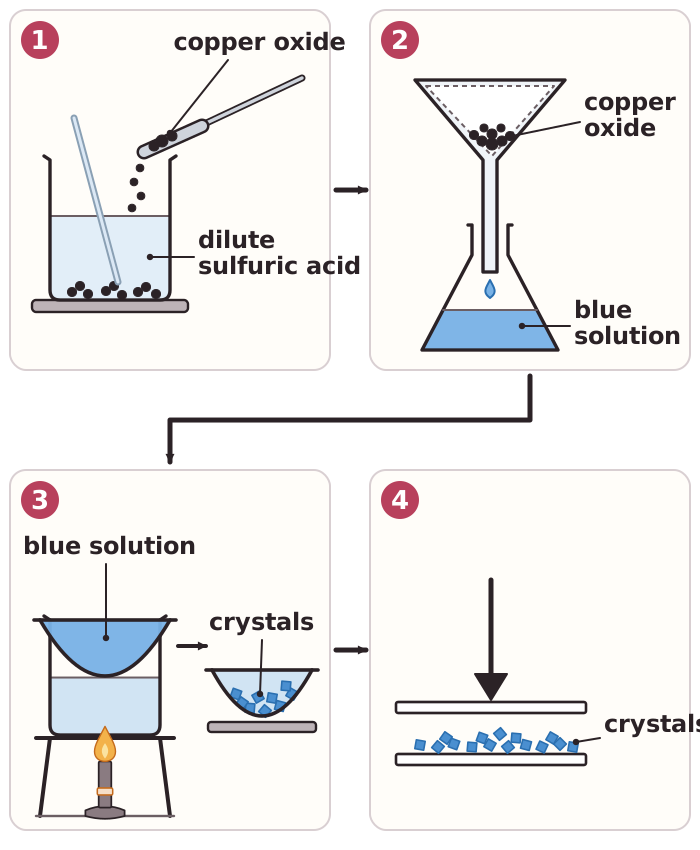
To make a pure dry sample of copper sulfate, add excess copper oxide to warm dilute sulfuric acid, stirring, until no more dissolves. The leftover solid is removed by filtering. Then heat the solution to evaporate some of the water and leave it to crystallise. Dry the crystals gently between sheets of filter paper. With a soluble alkali there is no solid to filter off, so you add the acid slowly with an indicator to see when it is neutralised.