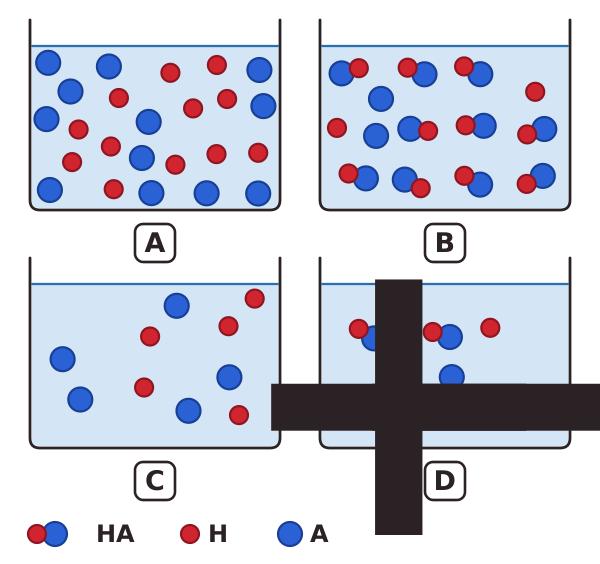
Two different ideas are easy to mix up. Dilute and concentrated describe how much acid is dissolved in a given volume of solution. A concentrated solution has a large amount of acid in each dm3, and a dilute solution has a small amount of acid in each dm3. Concentration is the amount of acid divided by the volume of the solution, for example in mol/dm3. Adding water to an acid makes it more dilute but does not change how many acid particles there are.
Strong and weak describe how far an acid ionises (splits up) in water. A strong acid ionises completely, so every molecule releases a hydrogen ion, H+. Hydrochloric acid, sulfuric acid and nitric acid are strong acids. A weak acid ionises only partly, so most of its molecules stay as they were and only some release H+. Ethanoic acid, citric acid and carbonic acid are weak acids.
The two ideas are independent. You can have a dilute solution of a strong acid, such as a little hydrochloric acid in a lot of water. You can also have a concentrated solution of a weak acid, such as a large amount of ethanoic acid in a small volume.