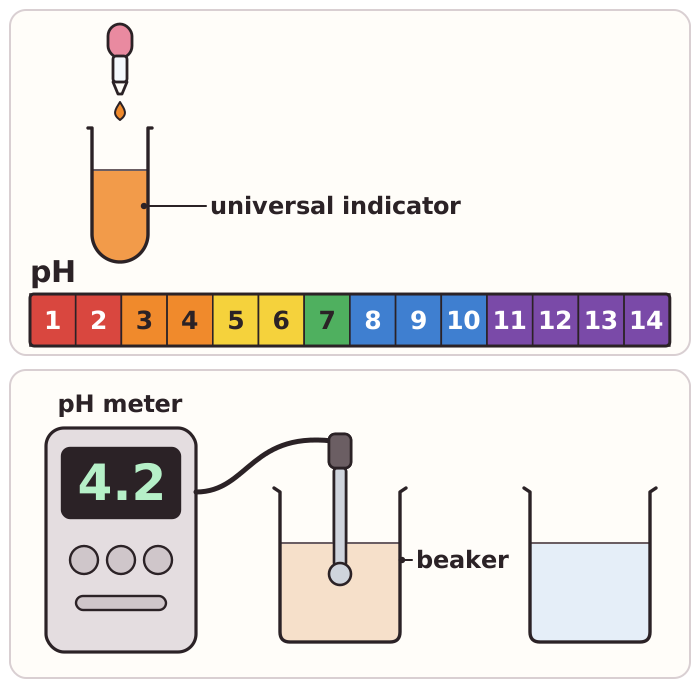
There are two main ways to measure the pH of a solution. Universal indicator is a mixture of dyes that changes colour across the whole pH scale. You add a few drops to the solution, or dip in universal indicator paper, then match the colour to a colour chart. Red shows a strong acid, orange and yellow weak acids, green is neutral, blue shows a weak alkali and purple a strong alkali. It is quick and cheap, but it only gives an approximate whole number, and it is hard to use on solutions that are already coloured.
A pH meter has a probe that you place in the solution. It gives a digital reading of the pH, which is more precise and does not depend on judging a colour by eye. The probe should be rinsed with distilled water between solutions so that one sample does not contaminate the next.
To find the pH of an unknown solution, measure it with universal indicator to get an approximate value, or with a pH probe for a more accurate reading, and then use the pH to say whether the solution is acidic, neutral or alkaline. Do not forget to record which method you used.