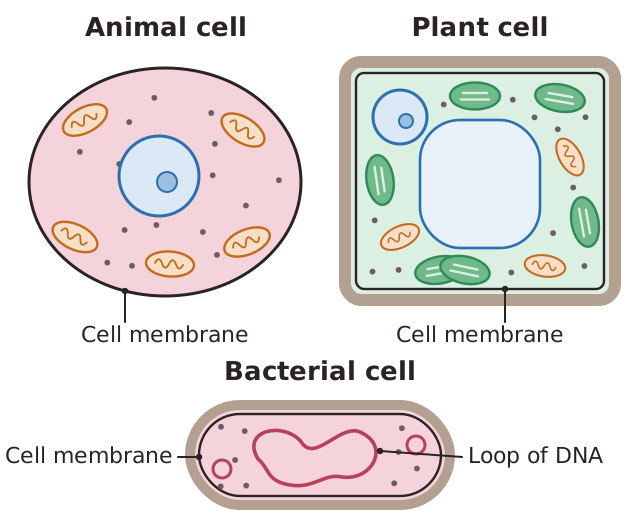
Plant and animal cells are eukaryotic cells. Their genetic material is kept in the nucleus, where it is organised into chromosomes. The cell membrane surrounds the cell. It contains receptor molecules that detect signals, and it is a selective barrier that controls which molecules pass in and out. Ribosomes are the site of protein synthesis.
Mitochondria contain the enzymes for cellular respiration, which releases energy. A cell that needs a lot of energy, such as a muscle cell, has many mitochondria. Chloroplasts are found in the green parts of plants. They contain chlorophyll, which absorbs light for photosynthesis, so a leaf cell has many chloroplasts. Animal cells do not have chloroplasts.
Prokaryotic cells such as bacteria are much smaller. They have no nucleus. Their genetic material is a loop of DNA lying free in the cytoplasm, and they may also carry small extra rings of DNA called plasmids.