Metabolism is the sum of all the chemical reactions in a living organism. Enzymes are biological catalysts that speed these reactions up. Enzymes are made of protein and are not used up, so one enzyme can be used again and again.
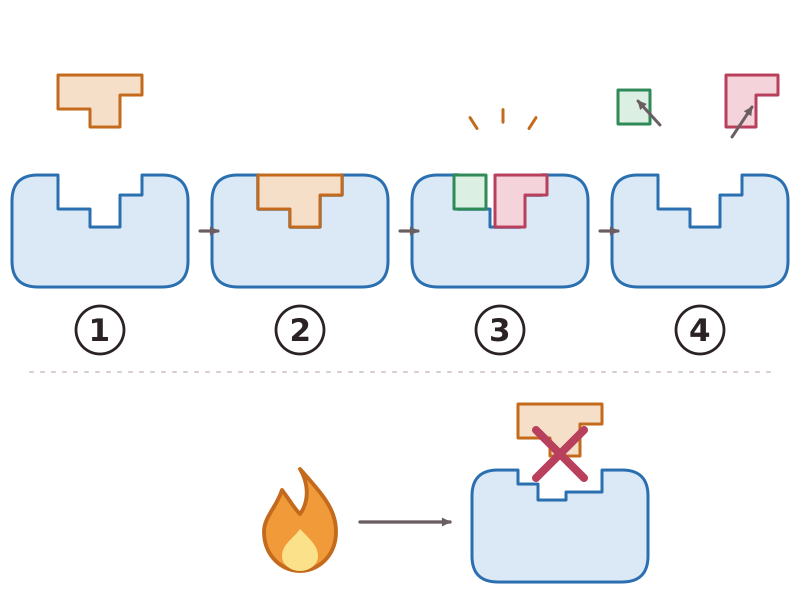
The substance an enzyme acts on is the substrate. Each enzyme has an active site, a part with a particular shape where the substrate binds. In the lock and key hypothesis, the substrate fits the active site like a key fits a lock. They form an enzyme-substrate complex, the reaction happens, and the products are released. Because the shape must match, each enzyme is specific and works on only one type of substrate.
Temperature affects the rate. Warming increases the rate up to the optimum temperature, because particles collide more often and with more energy. Above the optimum, the active site changes shape and the substrate no longer fits. The enzyme is denatured. Extreme pH denatures enzymes in the same way. Different enzymes have different optimum temperatures and pH values, so not every enzyme works best at 37 °C.
Increasing the substrate concentration raises the rate until every active site is occupied, and then the rate levels off. Increasing the enzyme concentration gives more active sites, so the rate increases if there is plenty of substrate.