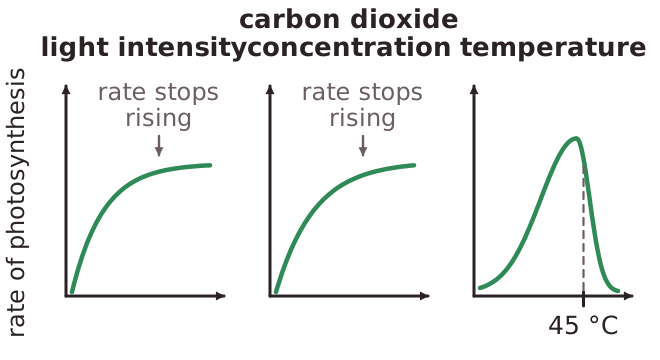
The rate of photosynthesis is how fast a plant makes glucose. It can be measured by the volume of oxygen given off in a set time. A factor that is in short supply and stops the rate going up is called a limiting factor. The three you need are light intensity, carbon dioxide concentration and temperature.
With more light, the rate rises, because there is more energy for the reaction. With more carbon dioxide, the rate also rises, because there is more of a reactant. In both cases the rate eventually levels off at a plateau, because some other factor has become limiting. The graph goes flat even though the factor is still increasing.
Temperature affects the enzymes that control the reaction. As the temperature rises, the particles move faster and collide more often, so the rate increases. Above about 45°C the enzymes start to denature and their shape changes, so the rate falls quickly. Below the optimum temperature, the rate is low because the enzymes work slowly.