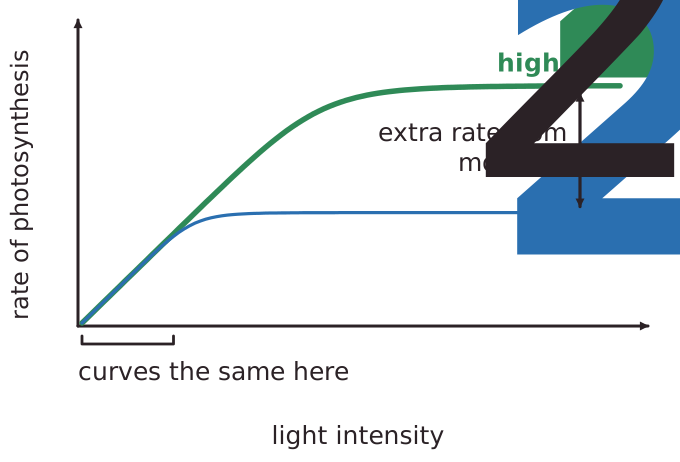
More than one factor affects photosynthesis at the same time. At any moment the factor that is in shortest supply is the one that limits the rate. If you increase that factor, the rate goes up. If you increase a factor that is not limiting, the rate does not change.
Imagine a plant in dim light with a lot of carbon dioxide and a warm temperature. Light is limiting, so adding more carbon dioxide has no effect. Raising the light intensity increases the rate until another factor, such as carbon dioxide, becomes the limit. The rate then plateaus again.
This explains graphs with two curves. The curve for a higher carbon dioxide concentration rises with light to a higher plateau. On the rising part both curves are the same, because light is limiting. On the plateau, the lower curve is limited by carbon dioxide, so adding carbon dioxide lifts it. Growers use this idea in greenhouses, where they can add light, heat and carbon dioxide, but each costs money, so they only increase the factor that is actually limiting.