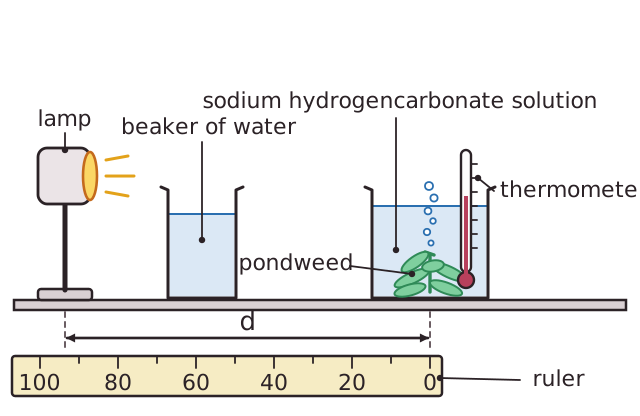
This practical investigates how light intensity affects the rate of photosynthesis, using an aquatic plant such as Canadian pondweed. A piece of pondweed is placed in a beaker of water with a little sodium hydrogencarbonate added, which supplies carbon dioxide so that it is not a limiting factor. A lamp is placed at a measured distance from the beaker, and the oxygen given off is collected.
The independent variable is the distance of the lamp from the plant, measured with a ruler, as this changes the light intensity. The dependent variable is the rate of photosynthesis. This is found by counting the bubbles of oxygen released in one minute, or by collecting the gas in a measuring tube and recording its volume.
Other variables must be controlled. Keep the same piece of pondweed, the same carbon dioxide concentration and the same temperature. A beaker of water placed between the lamp and the plant, or a water bath, stops the lamp heating the pondweed. Leave the plant for a short time at each new distance so it can adjust, and repeat each distance three times to calculate a mean. The result is that the rate of photosynthesis is higher when the lamp is closer, and lower when the lamp is further away. Counting bubbles is not very accurate because bubbles vary in size, and collecting the gas gives better data.