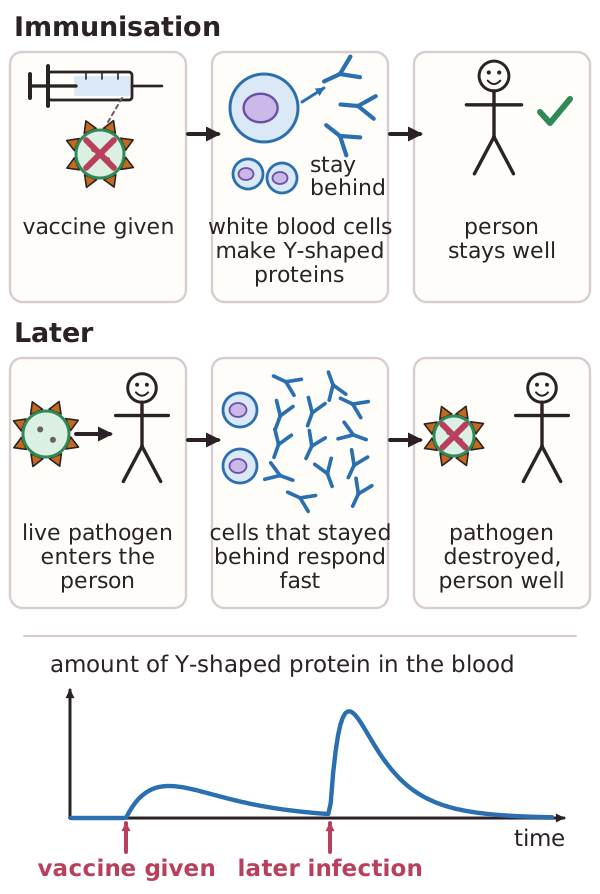
Immunisation protects a person against a disease before they are ever infected. A vaccine contains an inactive form of the pathogen. The pathogen cannot reproduce or cause the disease, but it still has its antigens on the surface.
When the vaccine is given, the antigens are recognised by lymphocytes. This triggers a primary immune response, so the lymphocytes produce antibodies against the antigens. Memory lymphocytes are also made, and these stay in the body. The person does not become ill, because the pathogen is inactive.
If the person later meets the live pathogen, the memory lymphocytes recognise it at once. The secondary response is much faster and bigger, so large numbers of antibodies are made quickly and the pathogen is destroyed before it can make the person ill.