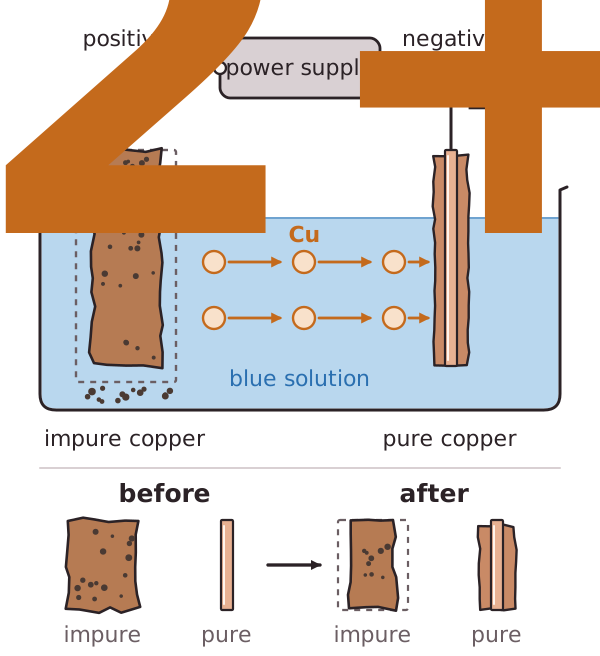
When copper sulfate solution is electrolysed with copper electrodes, the electrodes take part in the reaction. At the anode, copper atoms lose electrons and dissolve as copper ions: Cu → Cu2+ + 2e-. This is oxidation, so the anode gets smaller. At the cathode, copper ions from the solution gain electrons and are deposited as copper: Cu2+ + 2e- → Cu. This is reduction, so the cathode gets bigger.
The mass gained by the cathode equals the mass lost by the anode. Copper ions are formed at the anode as fast as they are removed at the cathode, so the solution stays blue. With inert electrodes it is different: oxygen forms at the anode and the solution gets paler. A larger current moves more charge each second, so more copper is transferred in the same time.
This is used to purify copper. A block of impure copper is the anode, and a thin piece of pure copper is the cathode. The electrolyte is copper sulfate solution. Copper dissolves from the anode and pure copper builds up on the cathode. Impurities do not reach the cathode. Insoluble ones fall to the bottom as sludge.