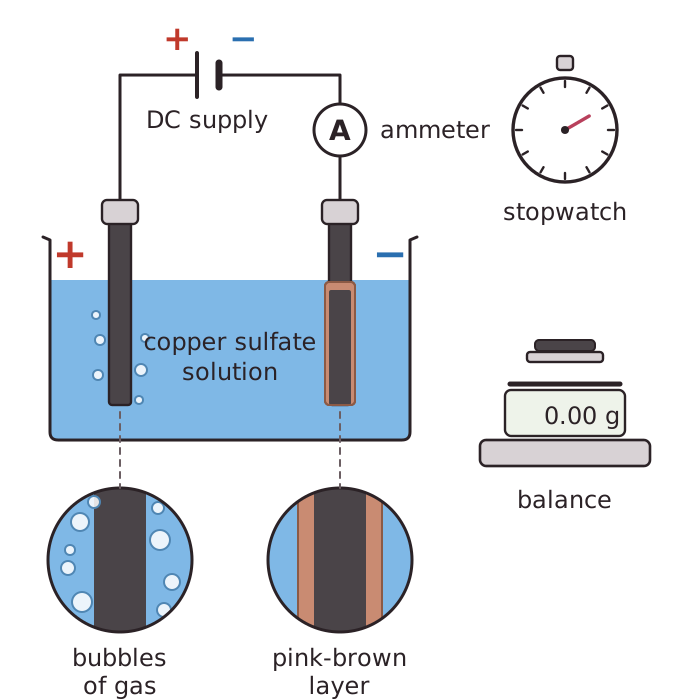
In this practical you pass a direct current through blue copper sulfate solution and compare two kinds of electrode. Copper sulfate solution is an electrolyte because it is an ionic compound dissolved in water. It contains Cu2+ ions and SO42- ions, plus a few H+ and OH- ions from the water.
Method. Pour copper sulfate solution into a beaker. Clean each electrode, dry it and weigh it. Place two electrodes in the solution, connect them to a direct current power supply through an ammeter, and switch on. Positive ions move to the negative electrode (the cathode) and negative ions move to the positive electrode (the anode). After a set time, switch off, rinse each electrode gently, dry it and weigh it again. Observe the electrodes and the colour of the solution.
Inert electrodes (graphite or platinum) do not take part in the reaction. At the cathode, Cu2+ ions gain electrons and a pink-brown layer of copper forms: Cu2+ + 2e- → Cu. This is reduction. At the anode, hydroxide ions from the water lose electrons and bubbles of oxygen gas are given off: 4OH- → 2H2O + O2 + 4e-. This is oxidation. The sulfate ions stay in solution. Copper ions are used up, so the blue colour fades.
Copper electrodes do take part. The cathode gains a layer of copper, as before, so its mass increases. The anode is oxidised, because copper atoms lose electrons and dissolve: Cu → Cu2+ + 2e-. The anode loses mass and no gas is made. Copper ions are removed at the cathode at the same rate as they are added at the anode, so the blue colour stays the same. The mass lost by the anode equals the mass gained by the cathode. Industry uses this to purify copper: impure copper is the anode and pure copper builds up on the cathode.