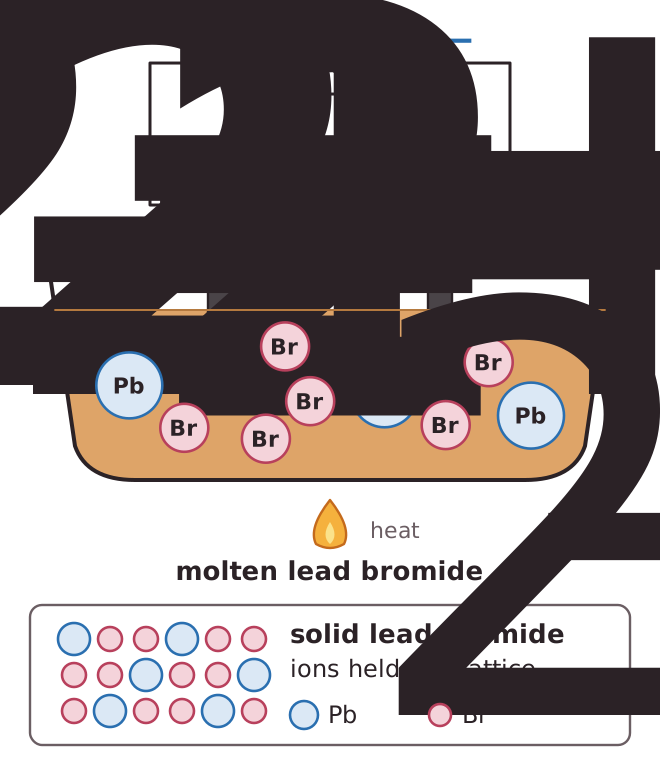
A binary compound contains just two elements. When a binary ionic compound is melted, its ions are free to move, so it can be electrolysed. There is no water present, so the only ions are the two from the compound. This makes the products easy to predict.
The positive metal ions move to the cathode and gain electrons, so the metal forms at the cathode. The negative non-metal ions move to the anode and lose electrons, so the non-metal forms at the anode.
Because there are no hydrogen ions from water to compete, even a very reactive metal is produced. Molten lead bromide gives lead and bromine. Molten potassium iodide gives potassium and iodine. Molten aluminium oxide gives aluminium and oxygen. Molten sodium chloride gives sodium and chlorine.