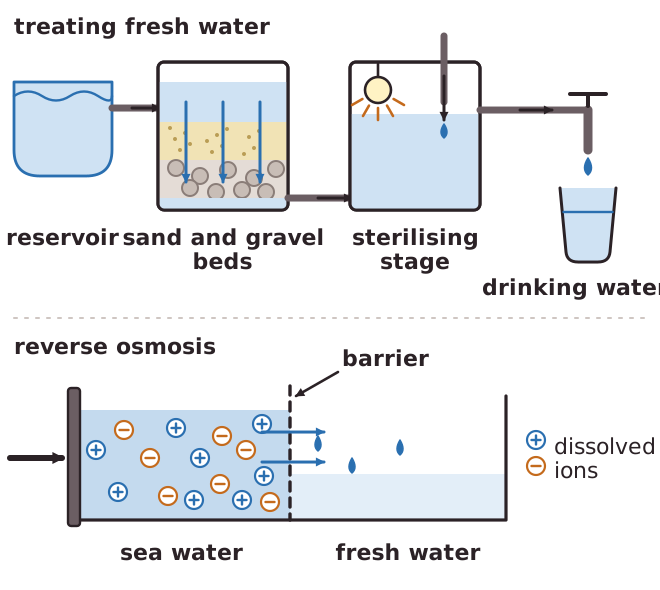
Potable water is water that is safe to drink. It is not pure water, because it can still contain dissolved substances, but it must have low levels of salts and no harmful microbes. In the UK, most potable water starts as fresh water from rain, collected in lakes, rivers and reservoirs, or as ground water stored in underground rocks called aquifers. These sources contain little dissolved salt, so they are the easiest to treat.
Treating fresh water has two main stages. First it is passed through beds of sand and gravel. This filtration removes insoluble solids. Then it is sterilised to kill microbes, using chlorine, ozone or ultraviolet light.
Waste water, such as sewage, needs much more treatment. Screens and grit tanks remove large objects. In sedimentation, solids settle out to leave a liquid called effluent and a solid called sludge. Air is bubbled through the effluent so that aerobic bacteria break down organic matter. The sludge is broken down by anaerobic bacteria, which produces methane that can be used as a fuel.
Where fresh water is scarce, salt water such as sea water can be used. The dissolved salts must be removed by desalination. One method is distillation: the water is boiled and the steam is condensed, leaving the salt behind. Another is reverse osmosis, where salt water is forced at high pressure through a partially permeable membrane that lets water through but not salt ions. Both methods use a lot of energy, so desalination is the most expensive way to make potable water.