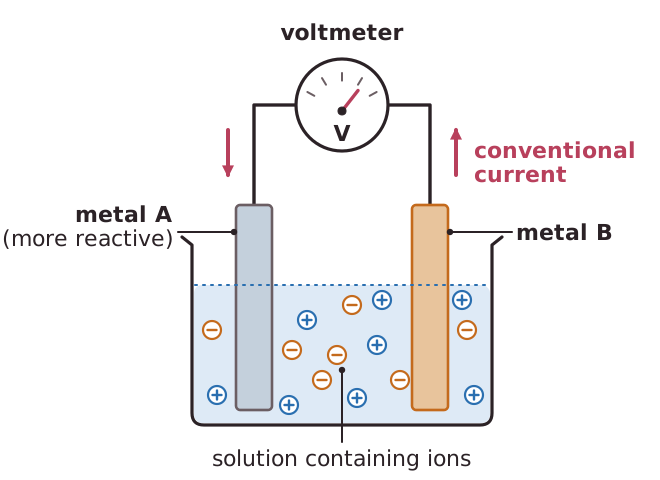
A chemical cell uses a chemical reaction to produce a potential difference, which is a voltage. A simple cell is made from two different metals, called electrodes, dipped in an electrolyte. The electrolyte is a solution that contains ions. The more reactive metal loses electrons more easily. These electrons flow through an external wire to the other metal, which makes an electric current.
The greater the difference in reactivity between the two metals, the greater the potential difference of the cell. A battery is two or more cells connected in series, which gives a bigger potential difference.
A chemical cell only produces a potential difference while there are reactants to react. When the reactants are used up the reaction stops and the cell goes flat. In a non-rechargeable cell the reaction cannot easily be reversed, so the cell is thrown away. In a rechargeable cell an external electric current reverses the reaction and the cell can be used again.