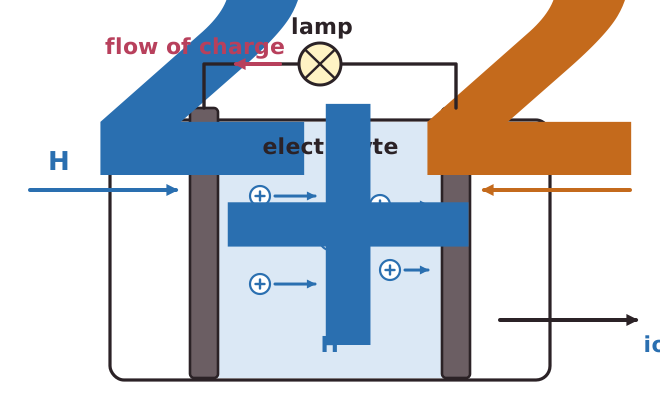
A fuel cell is a cell that is supplied with a fuel and oxygen from outside, so it keeps producing a potential difference as long as they are supplied. It does not go flat like a non-rechargeable cell. In a hydrogen/oxygen fuel cell, hydrogen is fed to one electrode and oxygen (from air) to the other. The two electrodes are separated by an electrolyte.
At the hydrogen electrode, hydrogen loses electrons, so it is oxidised: 2H2 → 4H+ + 4e-. The electrons travel round the external circuit. At the other electrode, oxygen gains electrons and reacts with H+ ions, so it is reduced: O2 + 4H+ + 4e- → 2H2O. The overall equation is 2H2 + O2 → 2H2O, and water is the only product.
Advantages: no carbon dioxide or other pollutants are released where the cell is used, and the cell can be refuelled quickly instead of being recharged. Disadvantages: hydrogen is flammable and difficult to store, there are few refuelling stations, and much hydrogen is made from fossil fuels such as methane, which does release carbon dioxide. For a use such as a bus that needs a long range and quick refuelling, a fuel cell can suit well, while a rechargeable battery may suit a small device better.