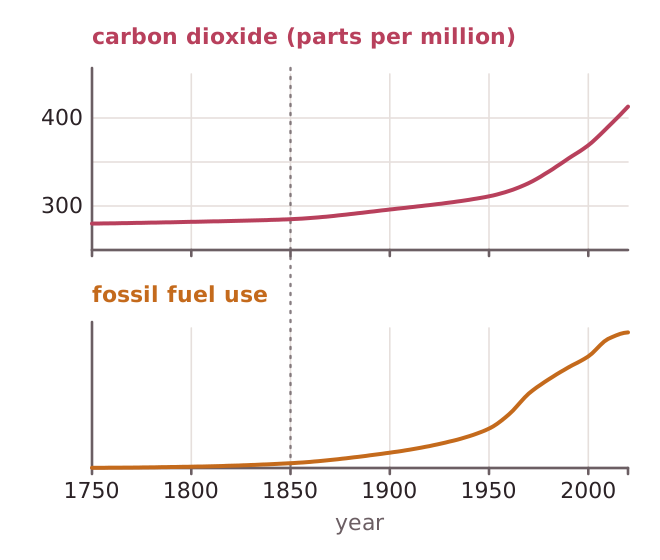
Since the Industrial Revolution the concentration of carbon dioxide in the air has risen steadily, from about 280 parts per million to over 400 parts per million. Over the same period the consumption of fossil fuels has gone up, and so has the average global temperature. There is a correlation between carbon dioxide concentration and fossil fuel use. A correlation shows that two things change together. On its own it does not prove one causes the other, so scientists also use other evidence: burning fossil fuels is known to release carbon dioxide, carbon dioxide absorbs infrared radiation, and ice cores and temperature records show how the air and climate changed.
Other human activities add greenhouse gases too. Deforestation means fewer trees remove carbon dioxide by photosynthesis, and burning forests releases it. Cattle farming, rice fields and landfill sites release methane.
There are uncertainties. The climate is very complex and has natural causes as well, such as volcanic eruptions and changes in the Sun's output. Computer models give predictions that depend on assumptions. Data from the distant past is incomplete and measurements contain errors. Results are checked by other scientists in peer review, and many independent studies agree, so most scientists accept that human activity is a main cause of the rise in temperature.