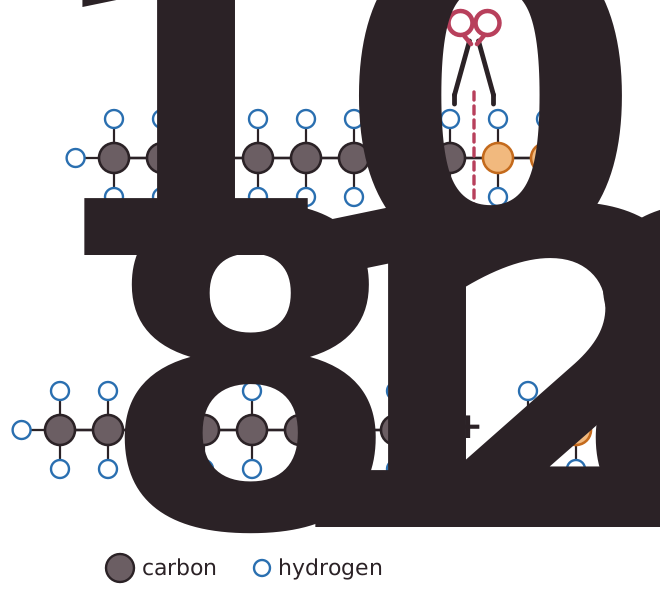
Fractional distillation gives more long chain hydrocarbons than we need and fewer short chain ones. Short chain hydrocarbons, such as those in petrol, are in high demand because they are more useful as fuels. They are also runnier and easier to ignite. Cracking is the process that turns surplus long chain hydrocarbons into more useful shorter ones.
In cracking the long chain hydrocarbons are heated to a high temperature so that they vaporise. The vapour is then either passed over a hot catalyst or mixed with steam at a very high temperature. The long molecules break apart, which is a thermal decomposition reaction.
The products are shorter alkanes and alkenes. Alkenes are hydrocarbons that contain a carbon-carbon double bond. For example C10H22 → C8H18 + C2H4. The shorter alkane can be used as a fuel such as petrol. The alkene is very reactive and is used as a monomer to make polymers. Alkenes turn orange bromine water colourless.