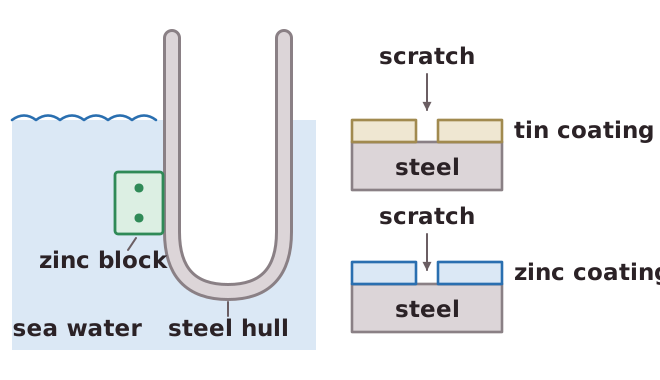
Rusting can be prevented by keeping oxygen and water away from the iron, which is a physical barrier, or by sacrificial protection. Barriers include paint on bridges and cars, oil or grease on moving parts such as chains, a plastic coating on wire racks, and a thin plating of another metal such as tin on food cans. A barrier only works while it is unbroken. If a tin coating is scratched, iron is more reactive than tin, so the exposed iron still rusts.
In sacrificial protection a more reactive metal is placed in contact with the iron. Zinc and magnesium are more reactive than iron, so they react with oxygen and water first. They corrode instead of the iron. Blocks of zinc or magnesium are bolted to ships' hulls and to buried steel pipelines. The block is gradually used up, so it must be replaced from time to time.
Galvanising is coating steel with zinc. It works in two ways. The zinc is a physical barrier, and if the coating is scratched the zinc still protects the iron by sacrificial protection because it is more reactive than iron. Galvanised steel is used for car body panels, buckets and crash barriers.