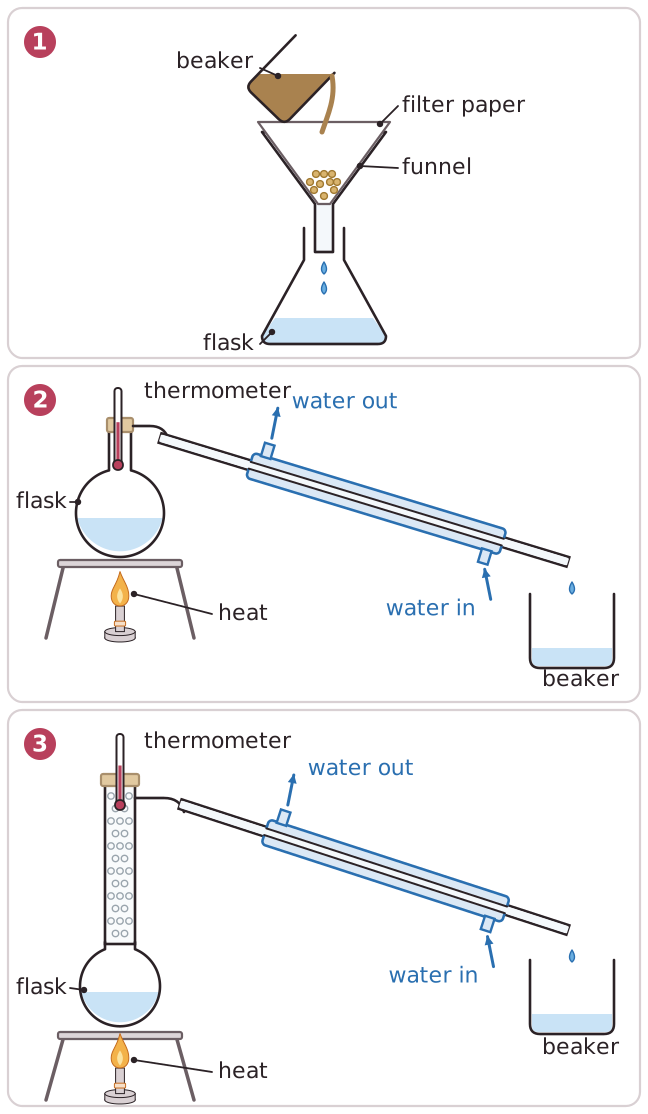
To choose a purification technique, look at the properties of the substances in the mixture. Filtration separates an insoluble solid from a liquid. The solid stays on the filter paper as the residue and the liquid passes through as the filtrate. For example, a mixture of sand and salt is stirred into water and filtered, so the salt solution is the filtrate and the sand is the residue.
To get a soluble solid back from its solution, use crystallisation. Some of the solvent is evaporated to make the solution more concentrated, then it is left to cool so that crystals form. To collect the liquid from a solution, such as pure water from salt solution, use simple distillation. The water boils and is condensed, but the dissolved salt has a much higher boiling point and stays behind.
Liquids that mix completely can be separated by fractional distillation if they have different boiling points, such as ethanol at 78 °C and water at 100 °C. Chromatography is used to separate small amounts of soluble substances, such as the dyes in an ink.