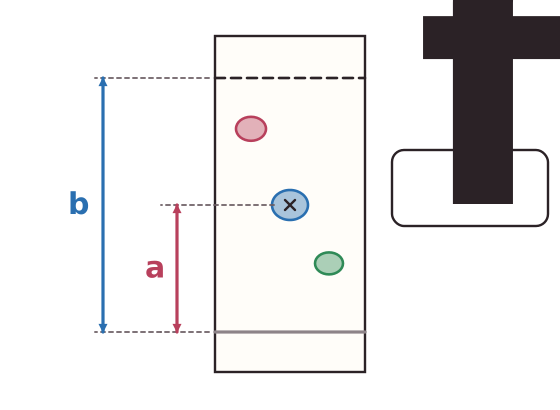
A chromatogram shows each substance as a spot. A pure substance gives one spot. A mixture gives more than one spot, so the number of spots tells you the least number of substances present. Spots that reach the same height, using the same solvent, are likely to be the same substance.
The Rf value is a number that describes how far a substance travels. Rf = distance moved by the substance ÷ distance moved by the solvent front. Both distances are measured from the baseline. The distance for the substance is measured to the centre of the spot, and the distance for the solvent is measured to the solvent front.
For example, a spot that moves 2.4 cm while the solvent front moves 6.0 cm has an Rf value of 2.4 ÷ 6.0 = 0.4. The solvent always travels further than any spot, so Rf values have no units and are always between 0 and 1. An Rf value of 0.5 means the substance travelled half as far as the solvent. The same substance has the same Rf value in the same solvent, so Rf values can be compared with known values to identify substances.