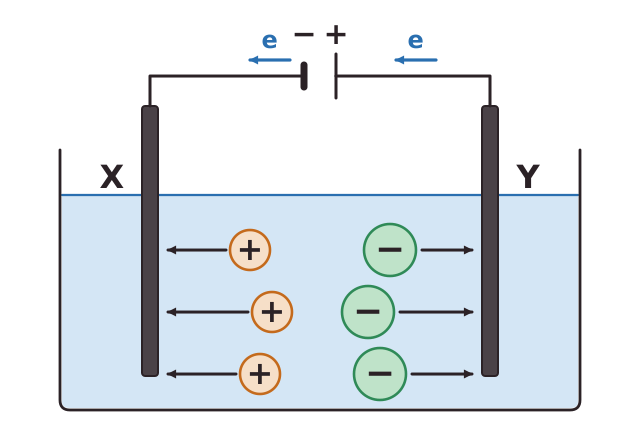
A binary ionic compound is made of two different elements, for example sodium chloride, NaCl, or lead bromide, PbBr2. When it is molten the only ions present are the metal ion and the non-metal ion, so the products are easy to predict.
The metal ions move to the cathode and form the metal. The non-metal ions move to the anode and form the non-metal. To name the non-metal product, change the ending of its name: chloride gives chlorine, bromide gives bromine, iodide gives iodine and oxide gives oxygen.
For molten sodium chloride the products are sodium at the cathode and chlorine at the anode. The equation is 2NaCl → 2Na + Cl2. Molten lead bromide gives lead at the cathode and bromine at the anode. The solid compound does not conduct because the ions are fixed in place, so the compound must be melted for the ions to be free to move.