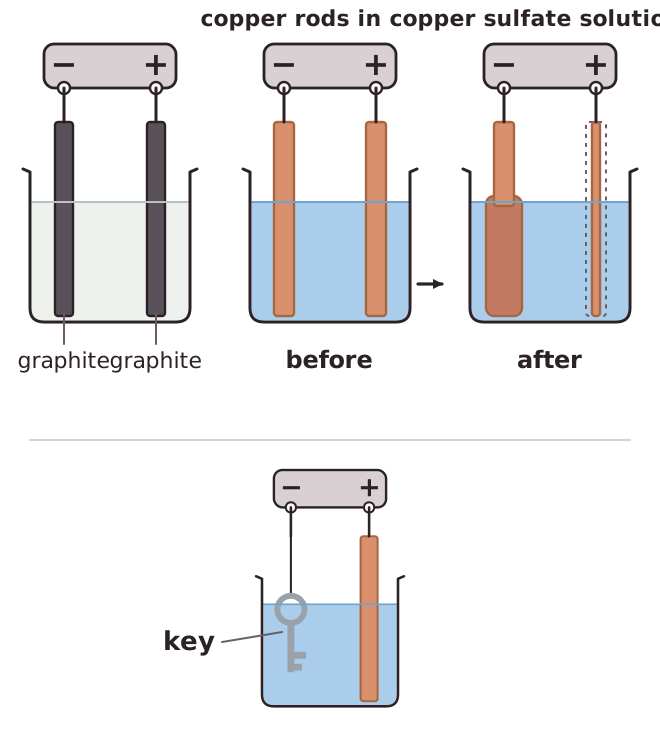
To carry out electrolysis, two electrodes are dipped into the electrolyte in a beaker and connected to a direct current (d.c.) power supply. The circuit is then complete, and any change at the electrodes can be observed.
Inert electrodes, such as graphite and platinum, do not take part in the reaction. Only the electrolyte is changed, so the products come from its ions. Non-inert electrodes can react. With a copper anode in copper sulfate solution, the anode itself dissolves, Cu → Cu2+ + 2e-, and copper is deposited on the cathode. The anode decreases in mass and the cathode increases in mass. The solution stays blue because copper ions are replaced as fast as they are removed.
This is used to purify copper: the impure copper is the anode and pure copper builds up on the cathode. It is also used for electroplating, where the object to be coated is made the cathode.