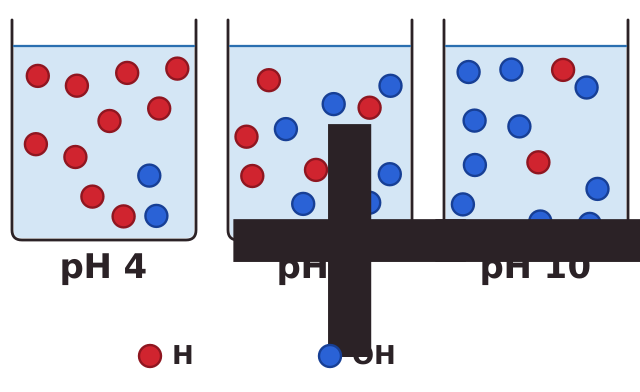
pH tells you about the concentration of hydrogen ions, H+, in a solution. All aqueous solutions contain some hydrogen ions and some hydroxide ions, OH-. Which ions there are more of decides whether the solution is acidic, neutral or alkaline.
In a neutral solution, such as pure water, the concentrations of hydrogen ions and hydroxide ions are equal, and the pH is 7. In an acidic solution there are more hydrogen ions than hydroxide ions. The higher the concentration of hydrogen ions, the lower the pH. A solution with a pH of 1 is strongly acidic and has a very high concentration of hydrogen ions.
In an alkaline solution there are more hydroxide ions than hydrogen ions. The concentration of hydrogen ions is low, so the pH is above 7. The more alkaline the solution, the fewer hydrogen ions it contains and the higher its pH. At GCSE you only need to give pH values as whole numbers.