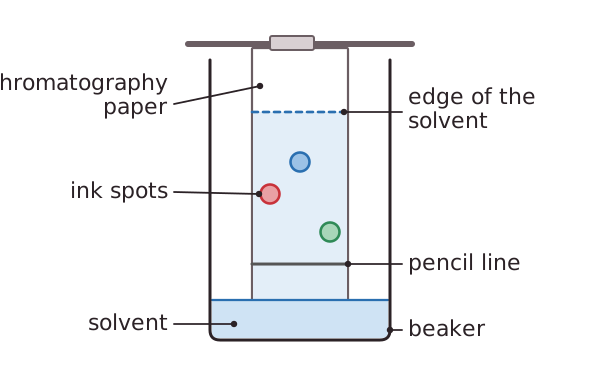
Paper chromatography separates mixtures of soluble substances, such as the dyes in an ink. A small spot of the mixture is placed on a pencil line, called the baseline, near the bottom of a piece of chromatography paper. The bottom of the paper is then stood in a solvent, such as water, with the solvent level below the baseline.
There are two phases. The solvent is the mobile phase because it moves up the paper. The paper is the stationary phase because it stays still. As the solvent soaks up the paper it carries the substances in the mixture with it.
The substances move at different rates, so they end up at different heights on the paper. A substance that is more soluble in the solvent, and that sticks less strongly to the paper, is carried further. A substance that sticks strongly to the paper moves only a short way. A substance that does not dissolve in the solvent does not move from the baseline.