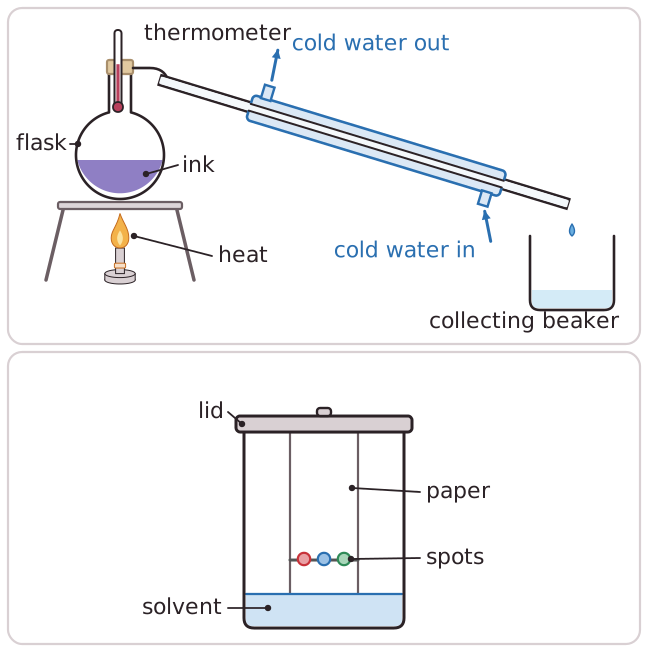
This core practical investigates what an ink is made from. Ink is a solution of dyes in water, so two techniques are used. Simple distillation separates the water from the dyes. Paper chromatography separates the different dyes from each other.
For simple distillation, ink is heated in a flask fitted with a thermometer and a condenser. The water boils at 100 °C and the water vapour passes into the condenser, where it cools and turns to liquid. The pure water is collected in a beaker. The dyes do not boil off, so they stay in the flask.
For paper chromatography, draw a baseline in pencil near the bottom of the paper, because pencil does not dissolve in the solvent. Put a small spot of each ink on the line, and keep the spots small. Stand the paper in a beaker with a little solvent, such as water, below the baseline, and cover the beaker with a lid. When the solvent is near the top, take out the paper and mark the solvent front straight away in pencil. Let it dry, then measure the distances moved by the spots and the solvent and calculate the Rf values. An ink that gives more than one spot is a mixture of dyes, and inks that have spots at the same height may contain the same dye.