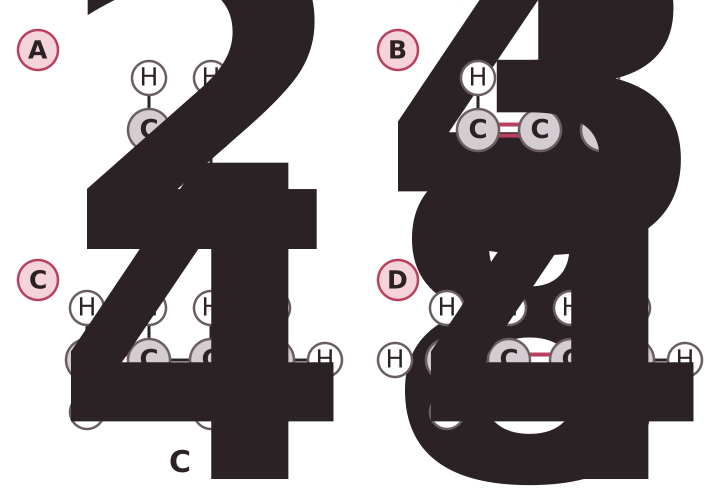
The alkenes are a family of hydrocarbons, which means they contain only carbon and hydrogen. Every alkene has one carbon-carbon double bond, and this gives them the general formula CnH2n: there are twice as many hydrogen atoms as carbon atoms.
The first three are ethene, C2H4, with two carbon atoms, propene, C3H6, with three carbon atoms, and butene, C4H8, with four carbon atoms and eight hydrogen atoms. A larger example is hexene, C6H12.
When you draw an alkene showing all the bonds, each carbon atom must make four bonds in total. The double bond counts as two of them. Ethene is CH2=CH2, with two hydrogen atoms on each carbon. Propene is CH3-CH=CH2.
Butene has two forms, because the double bond can sit in a different position in the chain. In but-1-ene the double bond is after the first carbon: CH2=CH-CH2-CH3. In but-2-ene it is after the second carbon, in the middle of the chain: CH3-CH=CH-CH3.