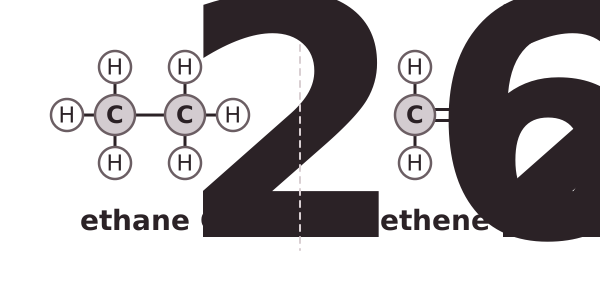
A hydrocarbon is saturated if all the bonds between its carbon atoms are single bonds. It holds as many hydrogen atoms as it possibly can. Alkanes such as ethane are saturated.
Alkenes are unsaturated hydrocarbons. Their molecules contain a carbon-carbon double bond, C=C, and so they do not hold the maximum number of hydrogen atoms. Ethene, C2H4, has two fewer hydrogen atoms than ethane, C2H6, even though both have two carbon atoms.
The C=C double bond is the functional group of the alkenes. A functional group is the part of a molecule that decides how it reacts. Because one of the two bonds in C=C can open up, an alkene can add other atoms to its carbon atoms. A saturated alkane has no spare bond to do this.