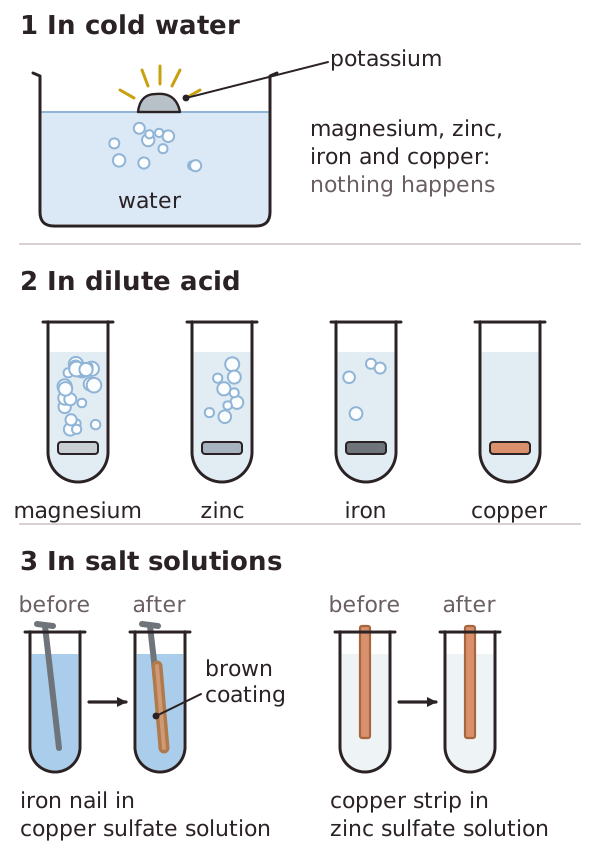
The reactivity of a metal is how readily it reacts. To compare metals we watch how they react with water, with dilute acids and with solutions of other metals' salts.
Potassium, sodium and calcium react with cold water to give a metal hydroxide and hydrogen gas. Potassium reacts most violently. Magnesium, zinc and iron do not react with cold water, but they do react with dilute acid to give a salt and hydrogen. Magnesium fizzes fastest, zinc is slower and iron slower still. Copper does not react with dilute acid at all.
A third test uses salt solutions. A more reactive metal will displace a less reactive metal from a solution of its salt. If an iron nail is placed in copper sulfate solution, brown copper forms on the nail because iron is more reactive than copper. Copper placed in zinc sulfate solution shows no reaction, because copper is less reactive than zinc. From these results we deduce the order: magnesium, zinc, iron, copper.