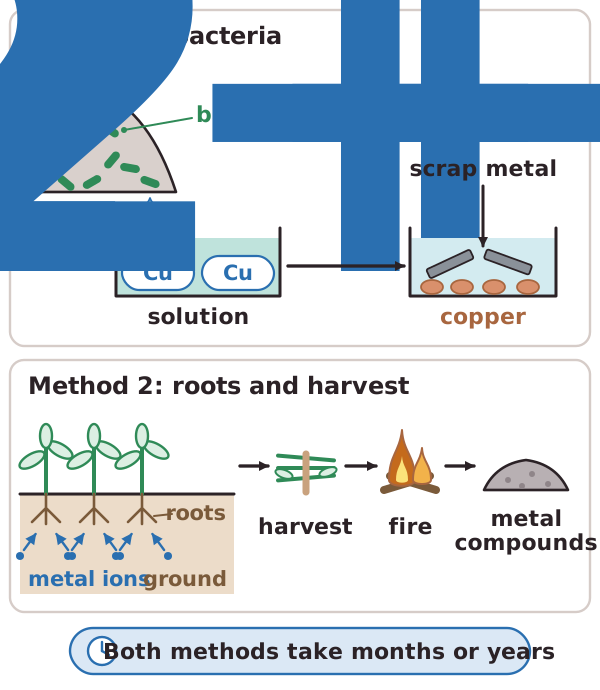
Traditional extraction needs ores with a lot of metal in them and uses large amounts of energy. As these rich ores run out, new methods are needed to get metals from low-grade ores and from waste. Two biological methods are used.
In bacterial extraction, bacteria are added to low-grade copper ores. The bacteria feed on the ore and produce a solution called leachate that contains copper ions. Copper is then obtained from the leachate, for example by displacement with scrap iron or by electrolysis.
In phytoextraction, plants are grown in soil that contains metal compounds. The plants absorb the metal ions through their roots. The plants are harvested and burned, and the metal compounds are obtained from the ash.
Evaluation: both methods use less energy than smelting, need no mining of rich ores, cause less air pollution and work on low-grade ores that are not worth smelting. But both are slow, taking months or years, and they give only small amounts of metal. Phytoextraction needs a lot of land, and leachate can be toxic and acidic if it escapes into water.