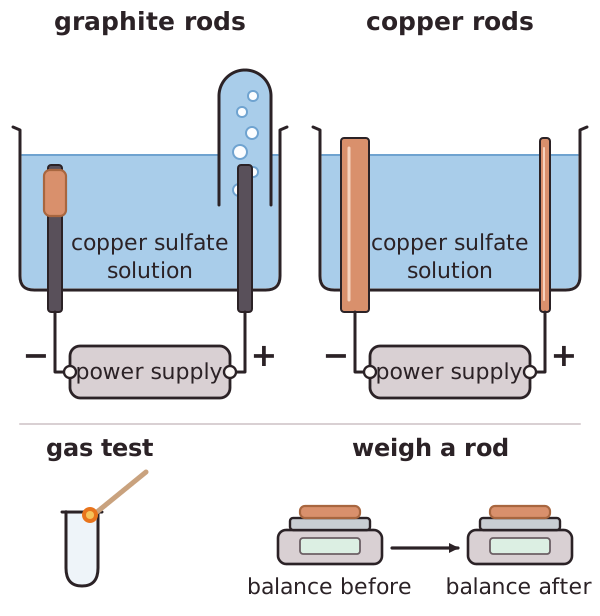
In this practical you electrolyse blue copper sulfate solution twice, first with inert graphite electrodes and then with copper electrodes. Both electrodes connect to a direct current power supply and dip into the solution in a beaker. The independent variable is the type of electrode. Keep the current, the time and the volume and concentration of the solution the same. For the copper electrodes, clean each one, dry it and weigh it before and after the run, rinsing and drying it again before the second weighing.
With inert electrodes the electrodes do not take part in the reaction. Copper ions, Cu2+, move to the negative cathode and gain electrons (reduction), so brown copper metal coats the cathode: Cu2+ + 2e- → Cu. Hydrogen ions from water are not discharged because copper is less reactive than hydrogen. Sulfate ions go to the positive anode but are not discharged either. Instead hydroxide ions lose electrons (oxidation) and bubbles of oxygen form: 4OH- → 2H2O + O2 + 4e-. Oxygen relights a glowing splint. The blue colour fades as copper ions are removed from the solution.
With copper electrodes the anode itself takes part. Copper atoms at the anode lose electrons and dissolve as ions: Cu → Cu2+ + 2e-. At the cathode copper ions gain electrons and are deposited as copper. The anode decreases in mass, the cathode increases in mass by the same amount, no gas is made and the blue colour stays the same because copper ions are removed and replaced at the same rate. This is how impure copper is purified.