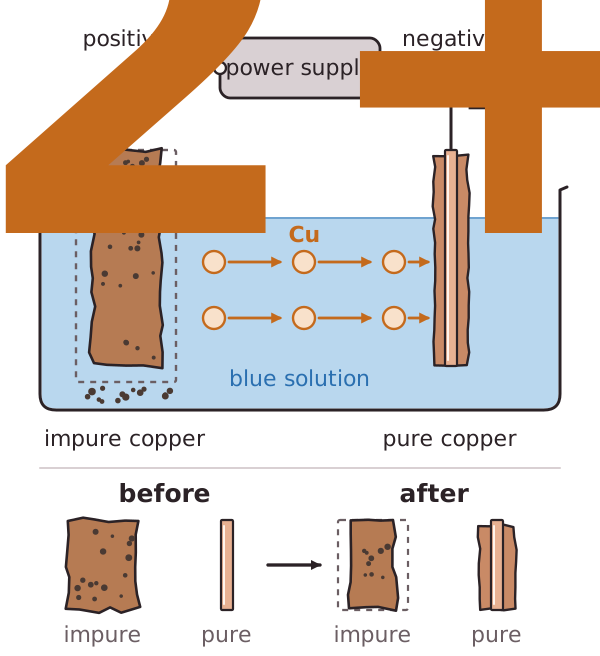
With inert electrodes copper sulfate solution gives copper at the cathode and oxygen at the anode, and the blue colour fades. With copper electrodes the result is different, because the anode itself takes part.
At the anode, copper atoms lose electrons and dissolve as copper ions: Cu → Cu2+ + 2e-. The copper is oxidised, and the anode gets smaller. The copper ions move through the electrolyte to the cathode, where they gain electrons: Cu2+ + 2e- → Cu. The copper ions are reduced, and the cathode gets bigger as copper is deposited on it. The solution stays blue because copper ions are added at the anode as fast as they are removed at the cathode.
This is used to purify copper. The anode is a thick block of impure copper, the cathode is a thin strip of pure copper, and the electrolyte is copper sulfate solution. Copper moves from the anode to the cathode. Insoluble impurities fall from the anode as a sludge, so pure copper builds up on the cathode. Pure copper is needed for electrical wiring because impurities reduce its conductivity.