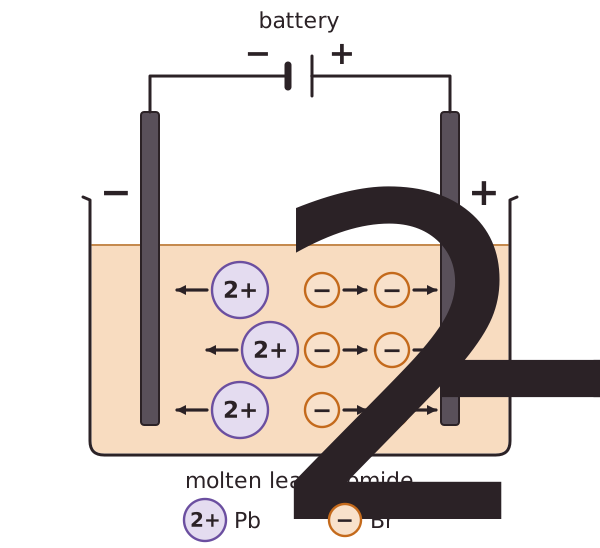
In an electrolyte, whether molten or dissolved, the ions are free to move. When a direct current is switched on, the electrodes become charged and each ion is attracted towards the electrode with the opposite charge.
Positively charged ions are called cations. They migrate to the negatively charged cathode. Negatively charged ions are called anions. They migrate to the positively charged anode. Opposite charges attract.
In molten lead bromide, the lead ions, Pb2+, move to the cathode and the bromide ions, Br-, move to the anode. Because the ions move in opposite directions, charge is carried through the electrolyte and the current flows.