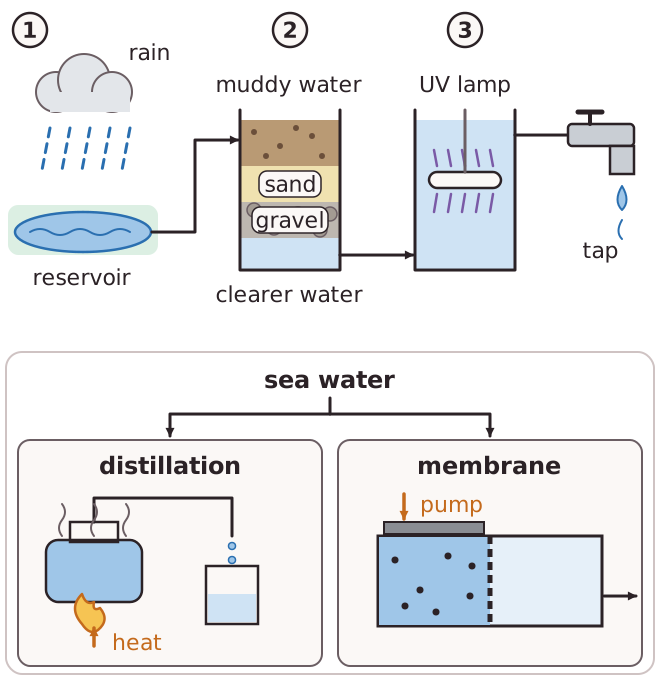
Water that is safe to drink is called potable water. For humans, drinking water must have sufficiently low levels of dissolved salts and microbes. Potable water is not pure water in the chemical sense, because it still contains dissolved substances.
In the UK, rain provides fresh water, which has low levels of dissolved substances. It collects in the ground and in lakes and rivers. Most potable water is made by choosing an appropriate source of fresh water, passing it through filter beds and sterilising it. Filter beds remove insoluble solids such as sand and soil particles. Sterilising kills microbes, using chlorine, ozone or ultraviolet light.
If supplies of fresh water are limited, salty water or sea water can be treated by desalination. This can be done by distillation or by reverse osmosis, which uses membranes. Both need large amounts of energy.
In required practical 8 you test water samples from different sources. You measure pH, find the dissolved solids by evaporating a known volume of water and weighing the solid residue left once the water has evaporated, and purify salty water by distillation.