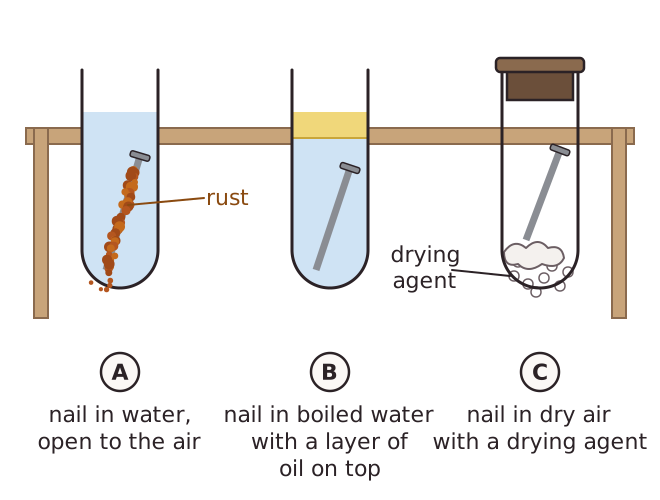
Corrosion is the destruction of materials by chemical reactions with substances in the environment. Rusting is the corrosion of iron and steel. Iron only rusts when both air and water are present. This can be shown with three test tubes, each holding an iron nail. In the first the nail is in water that is open to the air, and it rusts. In the second the nail is in boiled water with a layer of oil on top. Boiling removes the dissolved air and the oil stops more air getting in, so the nail does not rust. In the third the nail is in dry air with a drying agent, so there is no water, and again it does not rust.
Corrosion can be prevented by a coating that acts as a barrier, keeping air and water away from the metal. Greasing, painting and electroplating all do this. Aluminium is protected in a different way, because it has a thin layer of aluminium oxide on its surface that stops the metal underneath corroding further.
Some coatings contain a more reactive metal and give sacrificial protection. Zinc is more reactive than iron, so it reacts with oxygen and water instead of the iron. Iron coated in zinc is called galvanised iron. Even if the zinc coating is scratched, the iron is still protected, because the zinc is still there and still more reactive.