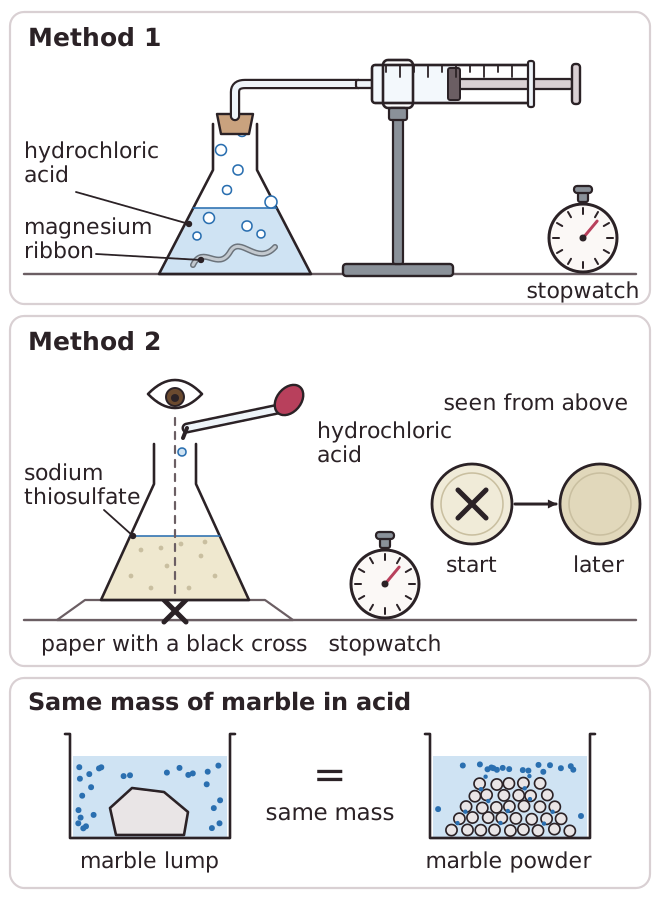
Reactions go at very different speeds. Five factors affect the rate of a chemical reaction: the concentration of reactants in solution, the pressure of reacting gases, the surface area of solid reactants, the temperature, and the presence of a catalyst.
Increasing the concentration of a solution makes the reaction faster. Increasing the pressure of a reacting gas makes the reaction faster. Breaking a solid into smaller pieces gives a larger surface area for the same mass, so more particles are exposed to the other reactant and the reaction is faster. Powdered marble therefore reacts faster with acid than a lump of marble of the same mass. Increasing the temperature makes the reaction faster. A catalyst also changes the rate, but it is not used up.
Required practical 5 investigates how concentration affects rate, using two methods. In the first, magnesium reacts with hydrochloric acid and the volume of hydrogen is measured with a gas syringe at set times. In the second, sodium thiosulfate solution reacts with hydrochloric acid and the mixture turns cloudy. A cross under the flask is viewed from above and the time for it to disappear is recorded.
You change one variable only, the concentration of the reactant, which is the independent variable. The temperature, the volumes and the mass of any solid are kept the same. A higher concentration gives a faster reaction, which means more gas in a given time or a shorter time for the cross to disappear.