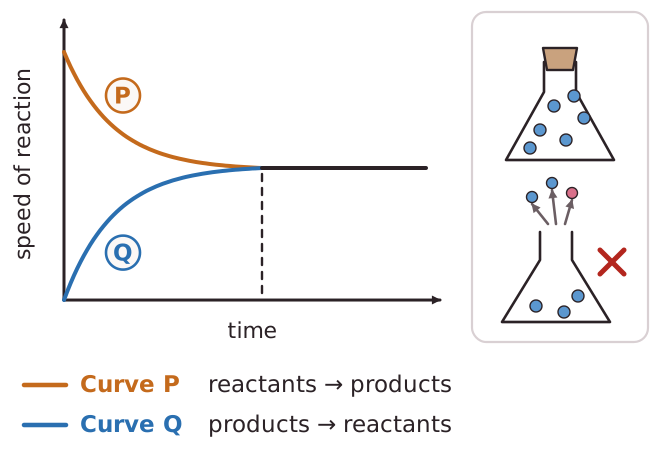
Imagine a reversible reaction in a closed container, where nothing can escape. At the start there are lots of reactant particles, so the forward reaction is fast and there is no product to react in reverse. As the reactants are used up, the forward reaction slows down. As products build up, the reverse reaction speeds up.
Eventually the two rates become equal. When a reversible reaction takes place in apparatus that prevents the escape of reactants and products, called a closed system, equilibrium is reached when the forward and reverse reactions occur at exactly the same rate. If the container is open, gases can escape, so equilibrium is not reached.
At equilibrium both reactions are still going on, so it is a dynamic equilibrium. The reactants are still turning into products and the products are still turning back into reactants, but at the same rate. This means the amounts of reactants and products stay constant. This does not mean the amounts are equal, because there can be far more reactants than products, or the other way round.