A catalyst changes the rate of a chemical reaction but is not used up during the reaction. It is still there, with the same mass, when the reaction has finished. Different reactions need different catalysts. For example, manganese(IV) oxide speeds up the breakdown of hydrogen peroxide. Enzymes act as catalysts in biological systems.
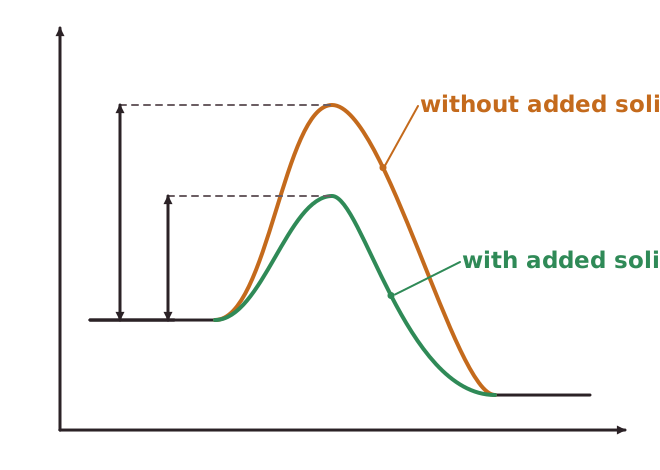
A catalyst increases the rate by providing a different pathway for the reaction, one that has a lower activation energy. More of the collisions then have enough energy to react, so the reaction is faster. On a reaction profile the peak for the catalysed pathway is lower than the peak for the uncatalysed pathway.
You can identify a catalyst in two ways. It makes the reaction faster, and it is not included in the chemical equation, because it is not used up. In 2H2O2 → 2H2O + O2 the catalyst is not written in the equation at all.