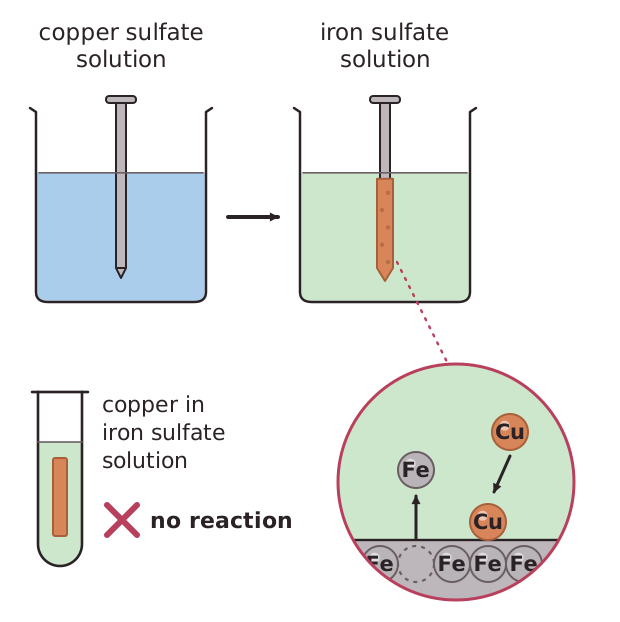
When metals react, their atoms lose electrons and form positive ions. For example, a sodium atom forms Na+ and a magnesium atom forms Mg2+. A metal that forms its positive ion more easily is more reactive. Metals can be placed in a reactivity series by comparing how they react with water and with dilute acid at room temperature.
From most to least reactive the series is potassium, sodium, lithium, calcium, magnesium, zinc, iron, copper. The non-metals carbon and hydrogen are often included too: carbon sits between magnesium and zinc, and hydrogen sits between iron and copper.
Potassium, sodium and lithium react vigorously with cold water, giving a metal hydroxide and hydrogen gas. Calcium also reacts with cold water, but less violently. Magnesium, zinc and iron do not react noticeably with cold water, but they do react with dilute acid to give a salt and hydrogen. Magnesium fizzes quickly, zinc more slowly and iron very slowly. Copper does not react with water or dilute acid at all. The faster the bubbles of hydrogen, the more reactive the metal.
A more reactive metal can displace a less reactive metal from a compound. If iron is placed in copper sulfate solution, the iron takes the place of the copper, forming iron sulfate and leaving copper metal. Copper cannot displace iron, because copper is less reactive.