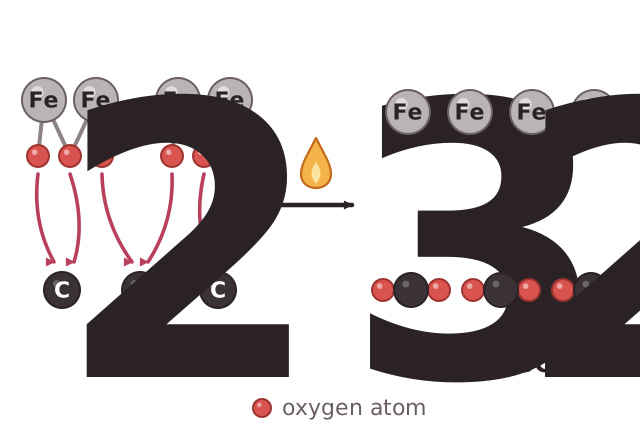
Very unreactive metals such as gold are found in the Earth as the metal itself. Most metals are more reactive and have joined with other elements, so they are found as compounds, often as oxides in rocks called ores. A chemical reaction is needed to extract the metal from its compound.
Metals that are less reactive than carbon can be extracted from their oxides by heating them with carbon. Carbon takes the oxygen away from the metal oxide. The oxide loses oxygen, so it is reduced, and the carbon gains oxygen, so it is oxidised. Iron is made this way. Iron oxide reacts with carbon to give iron and carbon dioxide: 2Fe2O3 + 3C → 4Fe + 3CO2.
This only works if carbon is more reactive than the metal. Metals above carbon in the reactivity series, such as potassium, sodium, calcium and magnesium, hold on to their oxygen too strongly for carbon to remove it. Those metals need a different method. You do not need to know the details of industrial processes, only to use the information you are given to decide whether carbon can be used.
To work out what is oxidised and what is reduced, follow the oxygen. The substance that loses oxygen is reduced and the substance that gains oxygen is oxidised.